Saturday, 26 July 2014

Flying monkeys and winged goats: Photos that make you question reality


Tail of a fish, head of a man?! More double-take fodder from Fontcuberta, exploiting our tendency to take "photographic evidence" at face-value. Tail of a fish, head of a man?! More double-take fodder from Fontcuberta, exploiting our tendency to take "photographic evidence" at face-value.
HIDE CAPTION
A 'real' mermaid fossil
<<
<
1
2
3
4
5
6
7
8
9
>
>>
STORY HIGHLIGHTS
  • The Science Museum hosts first major UK exhibition of Joan Fontcuberta's controversial photography
  • Known for playing with reality and fiction, the artist has fooled institutions with his 'false' records of strange animals
  • Fusing science with storytelling, Stranger than Fiction promises to delve deep into the mind of a renowned prankster
(CNN) -- There's only one way to start an interview with Joan Fontcuberta. Why, I ask him, should I believe a word he says?
"I like that question," says the pre-eminent Spanish conceptual artist, when we meet in the cafĂ© at London's Science Museum.
"I believe that doubting is the first step to rational knowledge. Not doubting implies submission, which is dangerous."
If truth be told, there are more reasons to doubt Fontcuberta than anyone else.
Joan Fontcuberta, artist
After all, this is the man who has pranked, dodged and bamboozled his way to the top of the art world.
Fake files
In 1987, in an exhibition called Fauna, he pretended that he had stumbled across the hidden archives of a German zoologist called Dr Peter Ameisenhaufen, which contained samples of animals previously unknown to science.
Ten years later, he convinced the world that a Russian cosmonaut had been lost in space in 1967, and the disappearance covered up.
The hoax fooled Spanish TV, which reported it as fact before realizing that the cosmonaut's name, Ivan Istochnikov, was a Russian translation of the artist's own name.
And at the age of 59, the diminutive, bearded Fontcuberta has lost none of his enthusiasm for "playing with conceptions of authority".
I struggle against every type of authority, in religion, science, politics, and art. I don't believe in hierarchies.
Joan Fontcuberta
Last month he pretended to "curate" an exhibition in Paris called the Trepat Collection, which mixed genuine photographs from the Forties and Fifties with his own pastiche, passing it all off as a single archive.
From now to November, the Science Museum -- that bastion of empiricism -- is hosting a major retrospective exhibition of Fontcuberta's work, entitled Stranger than Fiction.
It starts with taxidermy, including a squirrel with a snake's tail and a winged goat; moves on to photographs of "constellations" that are actually specks of dust on a car windscreen; and ends with pictures of the artist himself performing "miracles", such as levitation, in the garb of a Christian monk.
The exhibition is visually arresting, subversively humorous, and infernally clever. It is also deeply unsettling.
So what is it about Fontcuberta that makes him so intent on fooling the world?
Explosive moment
"When I was 13, I was experimenting in chemistry and I blew up my hand," he says, sipping espresso.
"I was interested in testing things, and was building rockets with gunpowder. Pyrotechnical stuff. It was wonderful, very effective. But one Sunday my parents were away traveling, and I was alone with my cousin.
"And I blew up my hand.
"Psychologically, this was very strong. It changed my whole life. I started hiding my hand so people didn't see my problem, which produced very complex human relationships. Life became about multiple truths."
Because of his damaged hand, he continues, he was excluded from military service, giving him "time to play with photography".
As he couldn't handle the camera quickly, photojournalism was out. So he became a "meditative photographic artist".
He shows me the stump of his left index finger. I am skeptical.
People often get angry with me, and accuse me of being a liar. But I never lie.
Joan Fontcuberta
He has told other journalists that he lost his finger while building a "homemade bomb".
Is he taking me for a ride -- or them? (Or has this interview made me paranoid?)
"Well, you could consider it a bomb," he says.
"Half and half. I used to make explosive artifacts and throw them out of the window. I also did underwater explosives with sodium. I made miniature submarines and ships, and blew them up with mines."
The world of Joan Fontcuberta is strange indeed.
Propaganda machine
Bombs and rockets aside, it was the political climate in which he came of age that informed Fontcuberta's career.
Prior to 1975, Franco ruled Spain as a dictatorship.
The climate of repression and the ubiquity of propaganda in Fontcuberta's childhood led him to a preoccupation with challenging authority in all its forms.
"Franco is no longer the enemy, but to me he was just one particular historical manifestation of authoritarianism," he says.
"I struggle against every type of authority, in religion, science, politics, and art. I don't believe in hierarchies."
Does that make him a Socialist? "I am a bizarre combination of socialism with anarchy thrown in," he says.
"But I'm also a pragmatist. I recognize that a representative democracy is necessary. But it has risks, and we must keep paying attention to the system. That's why I call myself an anarchist. I'm trying to fix the problems of authoritarianism that might occur in a representative democracy."
An irreverent eye
He illustrates this by citing photography. Documentary photojournalism, he says, is valuable as an "eye in the distance", showing people things to which they otherwise would never be exposed.
His role is that of the "oculist", ensuring that the eye remains accurate by questioning the veracity of what it shows us.
Religion is a favorite target.
Although he was brought up a Catholic, as a teenager he experimented with Zen and other alternative religions, before becoming a committed agnostic.
"The reason I often joke about religious belief is that it brings us to dogma, and to me dogma is stupidity," he says.
"I don't agree with faith. I think we should keep a questioning mind."
So what next for Fontcuberta? "I have lots of ideas and not enough time," he says.
"People often get angry with me, and accuse me of being a liar. But I never lie. I just create ambiguities and encourage people to question things."
He sighs, and drains his coffee. "My mother is always warning me that one day I will finish in jail. But I have more trust in humanity than that."
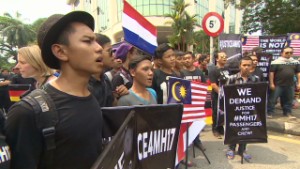
Did Malaysian leader's 'quiet diplomacy' seal MH17 deal with rebels?


Malaysia's delicate balancing act

STORY HIGHLIGHTS
  • Malaysian prime minister worked contacts to start talks with rebel leader, source said
  • On Tuesday, Najib Razak announced MH17 bodies, flight recorders would be returned
  • Najib's step-grandmother was on flight shot down near Ukrainian-Russian border last week
  • 298 people died in the disaster, the second for Malaysia Airlines in five months
(CNN) -- It was a moment of triumph amid a personal tragedy for Malaysian leader Najib Razak.
In the early hours of Tuesday morning, he could finally stand in front of his nation with news of a deal -- the breakthrough to release MH17's flight recorders from rebels' hands, and, as important, to bring home the remains of the victims.
Najib's own step-grandmother was on the flight, which was shot down near the Ukrainian-Russian border last Thursday. The second wife of his grandfather was flying to Malaysia to celebrate Hari Raya -- the end of the fasting month of Ramadan.
As he comforted his own family, as well as others who had lost loved ones, the Malaysian leader was working to unlock a standoff that had generated a political firestorm, said a source close to the prime minister.
Where was the anger?
Malaysia's' quiet diplomacy'
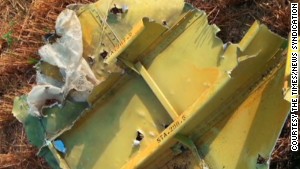
Does debris prove MH17 was shot down?
Ukraine spy chief: Russia pulled trigger
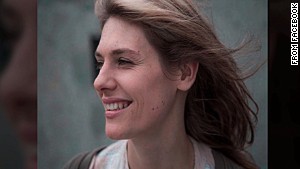
Remembering a visionary aboard MH17
Ukraine official denies MH17 accusations
Hundreds of bodies lay amid wreckage in an isolated field in what was described as "the world's biggest crime scene." They were being guarded by armed separatists who were refusing to give international monitors access to the site and material evidence.
Days after the crash, critics had started to question why the Malaysian leader had not made the same angry demands for answers heard from other world leaders.
The Boeing 777 shot down over Ukraine was the country's national carrier. It was carrying 298 people who trusted they'd reach their destination. It was the second catastrophic event to hit the airline in five months, following the unprecedented disappearance of flight MH370.
And, behind the Netherlands, Malaysia lost the greatest number of citizens on flight MH17: 43 people, including 15 crew. Where was the Malaysian leader's condemnation?
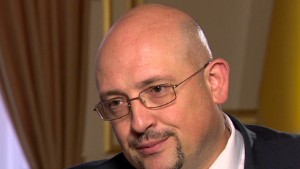
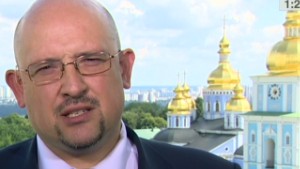
"It's really important that he did not start blaming anyone before getting what he needed," said Wan Saiful Wan Jan, a political commentator and CEO of the Institute for Democracy and Economic Affairs in Kuala Lumpur.
"If he had taken an aggressive stance right form the beginning we may not get the bodies and the black boxes," he said.
Strategy of 'quiet diplomacy'
From day one, according to the source, Najib had set his own diplomatic course; a strategy of quiet diplomacy.
Working with a small group -- less than a handful -- he set about making personal contact with the self-declared leader of the Donetsk separatists, Alexander Borodai.
Although Najib was in touch with the leaders of Russia, Europe, Ukraine and the United States, he was also using back channels to get to the man who controlled the crash site, the source said.
"He is a well-connected man. He was talking to people who could contact Borodai and eventually he came up with someone. And then he made personal contact," the source told CNN.
Ambassador points to Russia on MH17
Bodies of MH17 victims arrive in Kharkiv
Couples who were aboard MH17
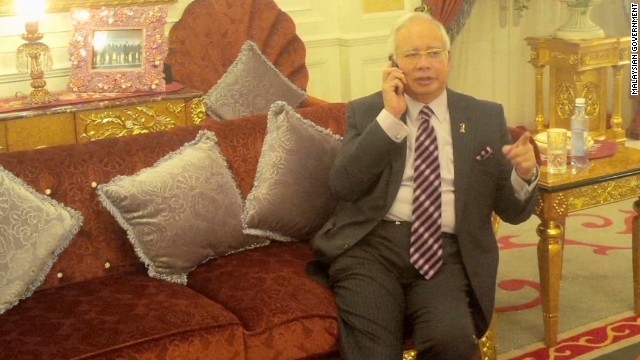
The first contact was made last Saturday, nearly two days after MH17 was downed. From then on, the two had "numerous" conversations, the source said, including some on Najib's personal mobile phone.
According to the source, Malaysia was regarded by the rebel leader as a non-aligned party in what had become a war of words between Russia and the West.
On top of that, the prime minister is seen by some as having a reputation as a deal-broker. He was instrumental in securing a peace deal between Islamic separatists in the southern Philippines and Manila.
Were claims over-stated?
However, Najib's claims to have brokered the deal with the pro-Russian rebel leader have been met with skepticism by some who say his role in the negotiations may be over-stated.
"I think he wanted to do the right thing there -- he calls it quiet diplomacy. He calls it a victory.... I don't think it can be called a success," said Gerhard Hoffstaedter from the University of Queensland, Australia.
Hoffstaedter said many of the bodies may have been handed over to authorities -- but not all of them. In addition, he said, the handover came much later than many Muslims would have hoped.
According to religious custom, bodies should be buried as soon as possible after death. The victims of MH17 had been left in a field in Ukraine for three days before their removal.
It's also unclear what Malaysia promised the rebels in order to secure the deal, Hoffstaedter added.
International pressure was growing on Borodai to co-operate with investigators, but Malaysian staff who were involved with the process believe the one-on-one contact was critical, and that a non-threatening Malaysia was the perfect negotiating partner.
Sometimes, we must work quietly in the service of a better outcome.
Najib Razak, Malaysian prime minister
"This has been a huge success for Najib domestically. He is clearly more popular now, the opposition is siding with him, even his critics are praising him," Wan Saiful said.
Prime minister under pressure
After facing international criticism of the country's handling of the MH370 disaster, the prime minister was under pressure to prove he was able to act quickly and decisively in the case of MH17.
The relief that his diplomacy had paid off was palpable when Najib began to speak to the nation in a televised address.
As he announced the deal with Borodai, he also gave the first public hint of his strategy.
"In recent days, there were times I wanted to give greater voice to the anger and grief that the Malaysian people feel. And that I feel. But sometimes, we must work quietly in the service of a better outcome," he said.
However, Wan Saiful said the real test of Najib's leadership will come when it's time to speak out against the perpetrators.
"The government should be more aggressive when there's concrete evidence. When that happens, it's very important to work with the international community, and to form a coalition to call for the perpetrators to be punished and brought to justice.
"When that happens, it's not really a matter of whether the PM is willing to be aggressive or not. He has to, otherwise it shows weak leadership," he said.

Did Malaysian leader's 'quiet diplomacy' seal MH17 deal with rebels?


Malaysia's delicate balancing act

STORY HIGHLIGHTS
  • Malaysian prime minister worked contacts to start talks with rebel leader, source said
  • On Tuesday, Najib Razak announced MH17 bodies, flight recorders would be returned
  • Najib's step-grandmother was on flight shot down near Ukrainian-Russian border last week
  • 298 people died in the disaster, the second for Malaysia Airlines in five months
(CNN) -- It was a moment of triumph amid a personal tragedy for Malaysian leader Najib Razak.
In the early hours of Tuesday morning, he could finally stand in front of his nation with news of a deal -- the breakthrough to release MH17's flight recorders from rebels' hands, and, as important, to bring home the remains of the victims.
Najib's own step-grandmother was on the flight, which was shot down near the Ukrainian-Russian border last Thursday. The second wife of his grandfather was flying to Malaysia to celebrate Hari Raya -- the end of the fasting month of Ramadan.
As he comforted his own family, as well as others who had lost loved ones, the Malaysian leader was working to unlock a standoff that had generated a political firestorm, said a source close to the prime minister.
Where was the anger?
Malaysia's' quiet diplomacy'
Does debris prove MH17 was shot down?
Ukraine spy chief: Russia pulled trigger
Remembering a visionary aboard MH17
Ukraine official denies MH17 accusations
Hundreds of bodies lay amid wreckage in an isolated field in what was described as "the world's biggest crime scene." They were being guarded by armed separatists who were refusing to give international monitors access to the site and material evidence.
Days after the crash, critics had started to question why the Malaysian leader had not made the same angry demands for answers heard from other world leaders.
The Boeing 777 shot down over Ukraine was the country's national carrier. It was carrying 298 people who trusted they'd reach their destination. It was the second catastrophic event to hit the airline in five months, following the unprecedented disappearance of flight MH370.
And, behind the Netherlands, Malaysia lost the greatest number of citizens on flight MH17: 43 people, including 15 crew. Where was the Malaysian leader's condemnation?
"It's really important that he did not start blaming anyone before getting what he needed," said Wan Saiful Wan Jan, a political commentator and CEO of the Institute for Democracy and Economic Affairs in Kuala Lumpur.
"If he had taken an aggressive stance right form the beginning we may not get the bodies and the black boxes," he said.
Strategy of 'quiet diplomacy'
From day one, according to the source, Najib had set his own diplomatic course; a strategy of quiet diplomacy.
Working with a small group -- less than a handful -- he set about making personal contact with the self-declared leader of the Donetsk separatists, Alexander Borodai.
Although Najib was in touch with the leaders of Russia, Europe, Ukraine and the United States, he was also using back channels to get to the man who controlled the crash site, the source said.
"He is a well-connected man. He was talking to people who could contact Borodai and eventually he came up with someone. And then he made personal contact," the source told CNN.
Ambassador points to Russia on MH17
Bodies of MH17 victims arrive in Kharkiv
Couples who were aboard MH17
The first contact was made last Saturday, nearly two days after MH17 was downed. From then on, the two had "numerous" conversations, the source said, including some on Najib's personal mobile phone.
According to the source, Malaysia was regarded by the rebel leader as a non-aligned party in what had become a war of words between Russia and the West.
On top of that, the prime minister is seen by some as having a reputation as a deal-broker. He was instrumental in securing a peace deal between Islamic separatists in the southern Philippines and Manila.
Were claims over-stated?
However, Najib's claims to have brokered the deal with the pro-Russian rebel leader have been met with skepticism by some who say his role in the negotiations may be over-stated.
"I think he wanted to do the right thing there -- he calls it quiet diplomacy. He calls it a victory.... I don't think it can be called a success," said Gerhard Hoffstaedter from the University of Queensland, Australia.
Hoffstaedter said many of the bodies may have been handed over to authorities -- but not all of them. In addition, he said, the handover came much later than many Muslims would have hoped.
According to religious custom, bodies should be buried as soon as possible after death. The victims of MH17 had been left in a field in Ukraine for three days before their removal.
It's also unclear what Malaysia promised the rebels in order to secure the deal, Hoffstaedter added.
International pressure was growing on Borodai to co-operate with investigators, but Malaysian staff who were involved with the process believe the one-on-one contact was critical, and that a non-threatening Malaysia was the perfect negotiating partner.
Sometimes, we must work quietly in the service of a better outcome.
Najib Razak, Malaysian prime minister
"This has been a huge success for Najib domestically. He is clearly more popular now, the opposition is siding with him, even his critics are praising him," Wan Saiful said.
Prime minister under pressure
After facing international criticism of the country's handling of the MH370 disaster, the prime minister was under pressure to prove he was able to act quickly and decisively in the case of MH17.
The relief that his diplomacy had paid off was palpable when Najib began to speak to the nation in a televised address.
As he announced the deal with Borodai, he also gave the first public hint of his strategy.
"In recent days, there were times I wanted to give greater voice to the anger and grief that the Malaysian people feel. And that I feel. But sometimes, we must work quietly in the service of a better outcome," he said.
However, Wan Saiful said the real test of Najib's leadership will come when it's time to speak out against the perpetrators.
"The government should be more aggressive when there's concrete evidence. When that happens, it's very important to work with the international community, and to form a coalition to call for the perpetrators to be punished and brought to justice.
"When that happens, it's not really a matter of whether the PM is willing to be aggressive or not. He has to, otherwise it shows weak leadership," he said.

US star Danielle Collins takes shock Miami Open win in emotional farewell season

Danielle Collins enjoyed a fairytale Miami Open this week, winning one of the biggest titles of her career and accomplishing one of her ma...